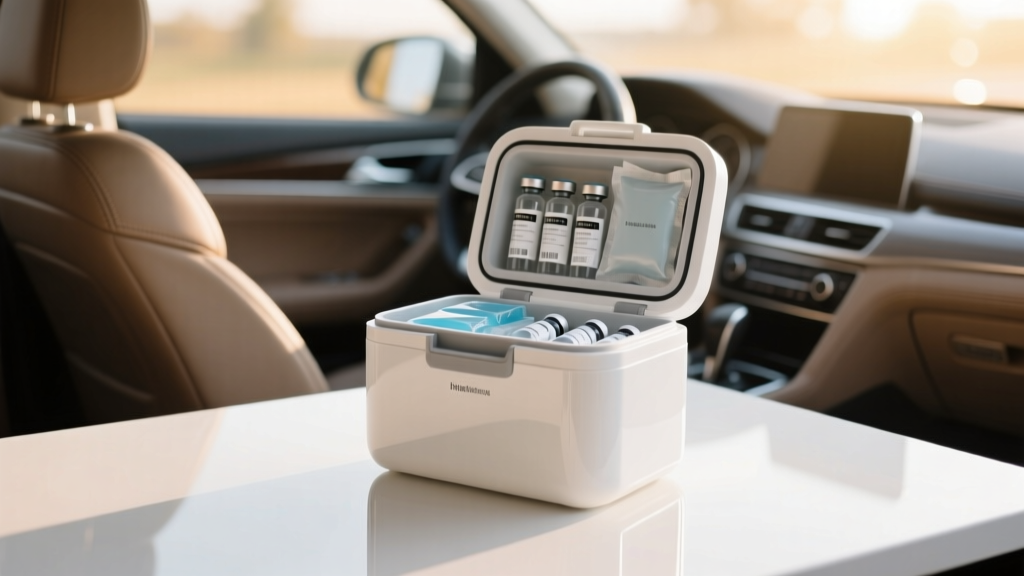
Insulin Cooler Box Troubleshooting Guide - CarInteriorMix
If you keep insulin in your vehicle?even occasionally?an insulin cooler box can be one of the most valuable ?car interior accessories? you own. It?s not just about comfort or convenience; it?s about protecting a temperature-sensitive medication from heat spikes in a parked car, freezing conditions on winter drives, and the constant vibration and power interruptions that happen on the road.
Many car owners buy a portable insulin cooler and assume it will ?just work? like a mini fridge. Then the real world shows up: a 12V socket that turns off when the ignition is off, a USB port that can?t supply enough current, a lid that doesn?t seal after a few months of use, or a cooler that reads 45�F while the insulin inside is warming past its safe range. This guide walks you through the most common insulin cooler box problems, how to diagnose them step-by-step, and how to keep your setup reliable in everyday driving.
Whether you?re managing diabetes yourself, traveling with a family member, or simply want a dependable medical cooler for long trips, the troubleshooting below is written for the car environment?tight spaces, inconsistent power, and fast-changing cabin temperatures.
How an Insulin Cooler Box Works (So Troubleshooting Makes Sense)
Not all insulin coolers are built the same, and your troubleshooting steps depend on which style you have. The three most common types used in cars are:
- Thermoelectric (Peltier) coolers: Plug into 12V/USB and actively cool (and sometimes warm). They?re sensitive to ventilation and ambient temperature.
- Compressor mini fridges: True refrigeration, usually larger and more expensive, often used by road trippers and RV drivers. They cool well even in hot cabins.
- Passive/gel-pack or evaporative coolers: No power needed. Great backup option, but cooling performance depends on ice packs, insulation, and outside conditions.
For most car interiors, thermoelectric and small compressor units are the popular choices because they can run from a 12V car outlet. The trade-off: power delivery and heat management become critical.
Quick Safety Check: Insulin Temperature Basics for Drivers
Always follow your insulin?s label and your clinician?s advice. As a practical driving guideline:
- Never store insulin loose in the glove box (temperature swings are extreme).
- Don?t freeze insulin?freezing can damage it.
- Avoid prolonged heat exposure?a parked car can hit dangerous temps quickly.
Real-world example: A black interior parked in direct sun can climb well above 120�F in under an hour. Even if your cooler is ?rated? for hot weather, it still needs proper power and airflow to keep up.
Most Common Insulin Cooler Box Problems (and What They Usually Mean)
- Cooler won?t power on: Outlet isn?t live, fuse issue, loose plug, bad adapter, or low-voltage cutoff.
- Cooler powers on but doesn?t cool: Not enough airflow, ambient cabin too hot, weak power supply, failing fan, or damaged cooling module.
- Temperature is inconsistent: Lid seal leak, frequent opening, sensor placement issues, or inaccurate built-in display.
- Condensation/water inside: Humid air exchange, poor sealing, or placing cold packs directly against warm air.
- Battery drain: Cooler running when parked, high current draw, or vehicle outlet always hot.
- Noise/vibration rattles: Fan contact, loose internal parts, or the cooler isn?t stabilized on a flat surface.
Step-by-Step Troubleshooting (Start Here)
Step 1: Confirm Your Power Source in the Car
Car power is the #1 cause of cooler problems. Before you blame the cooler, verify the outlet and adapter.
- Check if your 12V socket is ignition-switched. Many vehicles shut off power when the car is off. Test by plugging in a phone charger, turning the car off, and seeing if it still charges.
- Inspect the cooler plug fit. Some 12V plugs sit loosely in worn sockets and disconnect over bumps. Rotate gently and see if power flickers.
- Check the vehicle fuse. If the socket is dead, the fuse may be blown. Your owner?s manual will show the fuse location.
- Measure output if possible. A basic USB/12V voltmeter can reveal undervoltage, which causes weak cooling or random shutdowns.
Practical tip: If your cooler runs from USB, make sure you?re using a high-output USB port or a dedicated USB-C PD adapter. Many factory USB ports are designed for data or slow charging and can?t supply the steady current an active cooler needs.
Step 2: Verify the Cooler?s Ventilation (Especially in a Car Interior)
Thermoelectric coolers dump heat out the back or sides. If that hot air can?t escape, the inside won?t cool.
- Place the cooler so it has at least 2?4 inches of clearance around vents.
- Don?t wedge it tightly between seats and a center console.
- Avoid direct sun hitting the cooler body (even if the cabin is ?air conditioned?).
- Make sure vents aren?t blocked by floor mats, bags, or a seatback organizer.
Real-world example: A cooler sitting on thick carpet in the rear footwell can partially block intake vents and trap heat. A flat cargo mat or a small rigid board under it can improve airflow and stability.
Step 3: Check the Temperature Reading (Don?t Trust the Built-In Display Blindly)
Many insulin cooler boxes use a basic sensor that reads the air near the sensor?not the temperature of the insulin itself.
- Place a separate small thermometer inside the cooler (preferably one with a probe).
- Let the cooler run 30?45 minutes without opening.
- Compare the cooler display vs. the independent thermometer.
- If readings differ by more than a few degrees, treat the built-in display as a rough estimate.
Tip: Keep insulin away from direct contact with any cooling plate or ice pack unless the product is designed for that. Localized cold spots can freeze portions of a vial or pen even if ?air temp? seems safe.
Step 4: Inspect the Lid, Seal, and Hinges
A weak seal is a quiet performance killer, especially in hot cabins.
- Look for cracks, warped plastic, or a flattened gasket.
- Close the lid on a thin strip of paper and gently pull. If it slides out easily, sealing pressure may be poor.
- Make sure the latch (if equipped) fully engages.
Quick fix: Clean the gasket with mild soap and water, dry it, and remove crumbs or grit. In cars, tiny debris from snacks or pet hair can prevent a full seal.
Step 5: Diagnose Cooling Performance (Is It Undercooling or Just Overwhelmed?)
Use this simple test to determine whether the unit is failing or just fighting bad conditions.
- Bring the cooler indoors where ambient temperature is stable (around room temperature).
- Power it using the recommended adapter.
- Pre-cool for 45?60 minutes without opening.
- Check temperature drop using an independent thermometer.
If it cools well indoors but struggles in the car, the issue is usually heat load (hot cabin, sun exposure), ventilation, or insufficient power. If it performs poorly indoors too, the fan, module, or internal electronics may be failing.
Common Car-Specific Issues and Fixes
Problem: Cooler Shuts Off When You Park
- Cause: Your 12V socket is ignition-switched.
- Fix options:
- Use a portable power station (battery pack with AC/12V output) sized for your cooler.
- Use a hardwired 12V outlet or accessory circuit (professional install recommended).
- Switch to a passive insulin travel case with gel packs for short stops.
Problem: Cooler Runs, But Insulin Still Gets Warm on Hot Days
- Cause: Thermoelectric coolers often cool ?X degrees below ambient.? If the cabin is 100�F, the cooler may not reach a safe range.
- Fix:
- Pre-cool the cooler at home before driving.
- Keep it out of sun and away from hot surfaces (like a sun-baked cargo floor).
- Use reflective sunshades and crack windows when safely parked.
- Consider a compressor-based unit for extreme heat climates and long trips.
Problem: Condensation Soaks Labels or Packaging
- Cause: Humid air entering when opened; moisture collecting on cold surfaces.
- Fix:
- Store insulin in a small zip pouch inside the cooler.
- Add a small desiccant pack (kept away from medication contact).
- Open the lid less often; plan what you need before opening.
Product Recommendations and Comparisons (What Works Best in Cars)
Rather than naming a single ?best insulin cooler,? match the product style to how you drive.
For Daily Commuters: Compact Thermoelectric Cooler
Best for: Short trips, consistent power, moderate climates.
- Look for: automatic temperature control, low-noise fan, clear venting, and a stable 12V plug.
- Pair it with: a quality 12V adapter and an independent thermometer.
For Road Trips and Hot Climates: Small Compressor Fridge
Best for: Long drives, high-heat areas, overnight travel.
- Pros: true cooling, better performance when the cabin is hot.
- Cons: larger footprint, higher price, higher power draw (plan your battery strategy).
- Car interior tip: secure it with cargo straps so it doesn?t slide during braking.
For Backup and Parking Stops: Passive Insulin Travel Case
Best for: Quick errands, a backup if the car power fails, flights and walking around.
- Pros: no power needed, very portable.
- Cons: limited duration; requires re-freezing gel packs or recharging evaporative systems.
Common Mistakes to Avoid
- Relying on the glove box or door pocket as a ?cool enough? storage spot.
- Using a weak USB port that can?t supply enough current for active cooling.
- Blocking vents by stuffing the cooler between seat rails, bags, or floor mats.
- Letting insulin touch the cold plate/ice pack directly (risk of freezing localized areas).
- Opening the cooler repeatedly during errands?every open dumps cold air and pulls in humid heat.
- Leaving the cooler unsecured so it tips, spills condensation, or disconnects from power over bumps.
Practical Setup Tips for Real Driving
- Pre-cool before you leave: Start cooling at home or 20?30 minutes before departure while the car is running.
- Pick a stable location: A flat cargo area is usually better than a footwell. Use a non-slip mat.
- Use a thermometer you trust: A small digital unit with a probe gives more confidence than a flashy display.
- Plan for stops: If your outlet shuts off when parked, have a passive case ready for quick transfers.
- Keep a spare fuse: If your cooler shares a circuit with other accessories, one blown fuse can ruin a travel day.
FAQ: Insulin Cooler Box Troubleshooting
How do I know if my insulin cooler is actually keeping insulin safe?
Use an independent thermometer inside the cooler and give it time to stabilize (30?60 minutes). Check temperatures during real conditions?hot cabin, driving, and short stops. If the temperature swings widely with normal use, address power, ventilation, or upgrade to a more capable cooler.
Why does my cooler work while driving but not when the engine is off?
Many vehicles cut power to the 12V outlet when the ignition is off. Solutions include a portable power station, a hardwired always-on outlet (professionally installed), or switching to a passive travel case during stops.
Can I run an insulin cooler from a car USB port?
Sometimes, but it depends on current output. Factory USB ports may not provide enough power for active cooling. A high-quality USB-C PD adapter (or the manufacturer?s recommended power supply) is often more reliable.
My cooler shows 39�F, but items feel warmer. What?s happening?
The built-in sensor may be reading near a cold surface or in an airflow path. Confirm with a separate thermometer placed near the insulin. Also check for a poor lid seal or frequent opening.
Is condensation inside the cooler a problem?
Some condensation is normal when cold surfaces meet humid air, especially in summer. Keep insulin in a sealed pouch, reduce lid openings, and wipe moisture regularly so labels and packaging don?t get damaged.
When should I replace my insulin cooler box?
Replace it if it can?t maintain stable temperatures in controlled indoor tests, the fan is failing, the seal is damaged beyond cleaning, or it has intermittent power faults that you can?t trace to your vehicle outlet or adapter.
Next Steps: Make Your Car Setup Reliable
Start by testing your power source, then confirm ventilation and temperature accuracy with an independent thermometer. If your cooler can?t keep up with your climate or driving routine, consider stepping up to a compressor-style unit or pairing your current cooler with a passive backup case for stops. Finally, secure the cooler properly so it stays powered and stable during everyday driving.
For more practical car interior guides?power solutions, cargo organization, and travel-friendly accessories?browse the latest how-tos on carinteriormix.com.